
$89.00 $439.00 Sale

Anthony A. Goodman, M.D.
“It is the greatest gift to be able to explore the ever-changing outer edges of science and share them with my students.”
Institution: Montana State University
Alma mater: Cornell Medical College
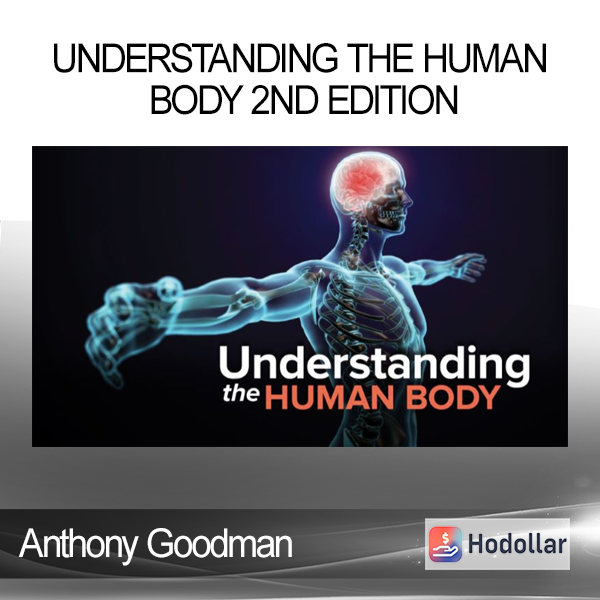
You live with it 24 hours a day. But how well do you really know it? These 32 lectures are your owner’s manual to a remarkably complex, resilient, and endlessly fascinating structure: the human body. Your guide is Dr. Anthony A. Goodman—surgeon, professor, and writer—who takes you step by step through the major systems of the body, explaining exactly how things work and why they sometimes don’t.
Using detailed color illustrations, life-sized models, and, in one lecture, a video shot during surgery, Dr. Goodman gives clear descriptions of structure (anatomy) and function (physiology) aimed at the level of the interested layperson.
“One can tell he has explained these topics to everyone from children to adults,” an enthusiastic viewer wrote to The Teaching Company.
Dr. Goodman’s approach differs from anatomy lab in medical school, with which he has extensive teaching experience. By necessity, medical students dissecting cadavers must study all of the organs in one area before moving on to the next. They simply cannot dissect the entire nervous system, then go back and dissect the vascular system, then the gastrointestinal system, and so on.
By contrast, this course introduces anatomy by systems and depends on illustrations, not cadavers. Dr. Goodman correlates the findings in anatomy with the functioning of the normal human body, its physiology.
“The study of anatomy alone, without reference to both the normal and abnormal function of the human body, has little meaning,” says Dr. Goodman. “However, when studied in the context of the exquisite and intricate relationships of anatomy to those normal processes that keep us alive and allow us to reproduce and evolve, the subject becomes a gripping page-turner.”
Each lecture concentrates on a particular organ or organ system; for example, the heart. The following lecture then examines the physiology of the system, looking at a normally functioning heart. Finally, Dr. Goodman discusses the more common clinical problems that occur when something goes wrong, or the pathology of the organ or system. These clinical correlations make the course particularly valuable, since in real life not everything goes as planned.
Cardiovascular System
The course opens with the cardiovascular system, focusing on the heart in Lectures 1 and 2. You examine its different parts, their responsibilities, and how the processes can break down. Lectures 3 and 4 complete the cardiovascular system with descriptions of the anatomy and physiology of the great vessels of the body, including arteries, veins, and their relationships.
Respiratory System
Tied directly to the structure and function of the heart and great vessels is the respiratory system, covered in Lectures 5 and 6, which address the anatomy and physiology of the lungs.
Nervous System
The lectures continue with the nervous system, the reason for the existence of all other organ systems. Lectures 7 and 8 explore the structure and function of the brain. Lecture 9 covers the spinal cord and spinal nerves. Lecture 10 addresses the autonomic nervous system and cranial nerves. Lecture 11 focuses on vision and the eye. Lecture 12 examines the ears, hearing, and balance. Lecture 13 concludes with memory, brain pathology, anesthesia, and pain.
Digestive System
Lectures 14 and 15 examine the upper gastrointestinal tract—the mouth, esophagus, and stomach. Lectures 16 and 17 continue with the pancreas, liver, and biliary tree. Lectures 18 and 19 focus on the small intestine, colon, and rectum.
Endocrine System
Lecture 20 examines the pituitary gland and adrenal glands. Lecture 21 covers the endocrine pancreas. Lecture 22 completes the system with the thyroid gland and parathyroid glands.
Urinary System
Lectures 23 and 24 focus on the kidneys, ureters, and bladder.
Reproductive System
Lectures 25 and 26 cover the male and female reproductive systems. Lecture 27 explores genetic inheritance and its potential problems.
Musculoskeletal System
Lecture 28 examines the physiology and physics of muscles. Lecture 29 focuses on muscle anatomy. Lecture 30 addresses the skeleton, its anatomy and physiology.
Immune System
Lecture 31 explores the immune system, the body’s major defense mechanism.
Cancer
The course concludes with a lecture on the biology of human cancer.
Dr. Goodman’s teaching style is clear but comprehensive, objective but humane, learned but lighthearted. He earned his undergraduate degree from Harvard University and his M.D. from Cornell Medical College. After training at the University of Michigan Medical Center, he completed his surgical education through the Harvard Surgical Service at multiple hospitals.
He is a Fellow of the American College of Surgeons and a Diplomate of the American Board of Surgery. He currently teaches gross anatomy at Montana State University in the W.W.A.M.I. Medical Sciences Program.
“While it is certain that this course will not prepare you for performing an emergency tracheotomy, a wilderness appendectomy, or an informal diagnosis of your neighbor’s child’s illness,” says Dr. Goodman, “I hope it will excite and inflame an interest in your own body, its processes, and ‘the ills that flesh is heir to.’”
– After making a purchase, you will see a View your order link to the Downloads page. Here you can download all the files related to your order.
– In case the link is broken for any reason, please contact us and we will resend a new download link.
– If you can’t find the download link, please don’t worry about it. This course is usually available and shipped within one day
– The course you purchased will have lifetime access
– Our support staff is the best by far! Please contact us at email: [email protected] and we will be happy to help!