Brian Siddhartha Ingle – The Living Somatics Training

$499.00 $1,799.00 Sale

Brian Siddhartha Ingle - The Living Somatics Training

Brian Siddhartha Ingle – The Living Somatics Training

UNIT 1: Foundations of Somatic Self-Healing — Principles, Practice & Embodied Learning
(Modules 1-7)

This foundational unit introduces somatic movement education as a living system of self-healing grounded in philosophy, neuroscience, and direct bodily experience.

Drawing from Plato’s two systems of medicine, students explore the distinction between external intervention and the body’s innate self-regulating intelligence.

Through a progression of gentle, awareness-based movement lessons, you’ll learn how somatic education restores choice, reduces habitual tension, and reorganizes movement from the inside out.

Key concepts such as habituation, embodied anatomy, pandiculation, and daily self-practice are introduced not as theory alone, but as lived experience.

This unit establishes the core framework for the training — shifting from effort-driven correction toward sensing, listening, and trusting the body’s self-correcting mechanism as the primary source of healing and learning.

Key Takeaways

  • The formula for self-healing: awareness, regulation, and intelligent movement
  • Core principles and strategies of somatic education versus exercise-based approaches
  • Understanding Plato’s two systems of medicine and their relevance to modern somatic healing
  • Somatic habituation and embodied anatomy as lived, sensory experiences

Experiential lessons:

  • Front-body opening (orientation and breath)
  • Back-body opening (support and stability)
  • Side-body opening (integration and balance)
  • Turning lessons (sitting and lying down supine)
  • Hip lesson for restoring the function and position of the head of the femur
  • Establishing a daily self-practice for ongoing personal development

Module 1: Reclaiming the Center — Anxiety, the Front Body, and the Foundation of Movement (April 21)

Module 2: Support and Stability — Releasing Habitual Posture, Spinal Compression & Chronic Back Tension (April 28)

Module 3: Somatic Movement Principles & Side-to-Side Freedom — Restoring Lateral Balance and Integration (May 5)

Module 4: Habituation & Turning — Reversing Recurrent Movement Patterns & Restoring Functional Rotation (May 12)

Module 5: Evolution, History & Hip Intelligence — Restoring Joint Function While Freeing the Hips and Legs (May 19)

Module 6: Pandiculation & Functional Turning in Sitting — Reducing Strain and Reversing Chronic Muscle Contraction (May 26)

Module 7: Integration & Daily Self Practice — Establishing a Practice That Supports SelfHealing (June 2)

Unit 2: Functional Anatomy, Perception & Embodied Somatic Practice
(Modules 8-13)

This unit develops a functional understanding of anatomy as it is lived and perceived through movement. You’ll explore breathing, walking, spinal organization, and joint function as integrated, whole-body processes rather than isolated mechanics.

Each lecture is paired with a guided somatic movement lesson, allowing you to experience how awareness, scanning, and inquiry refine coordination and reduce habitual effort.

Core joints — including the hips and shoulders — are explored as dynamic relationships that influence posture, balance, and ease in daily life.

Alongside anatomical exploration, you’ll cultivate precise language and internal observation skills that support clarity, safety, and self-directed learning without force or correction.

This unit explores common conditions supported by somatic movement education, grounding theory in practical application. It builds perceptual skills, movement intelligence, and teaching presence to help you guide embodied learning with confidence and sensitivity.

Key Takeaways

  • Functional anatomy of breathing, walking, and the spine as whole-body movement patterns
  • The role of scanning and inquiry in refining perception and supporting self-regulation
  • Understanding hip and shoulder joints as dynamic organizers of movement and stability
  • Developing clear internal awareness and descriptive language for somatic experience
  • Applying somatic movement principles to common functional conditions
  • Inquiry into conditions that somatic movement can support

Experiential lessons:

  • Breathing lesson (anatomy of breathing and spinal mobility)
  • Walking lesson (breaking down the walking pattern)
  • Pelvic clock lesson (scanning and pelvic-spinal differentiation)
  • Shoulder lesson (shoulder organization in relation to the whole)
  • Hip lesson (functional anatomy of the hip joint in relation to the whole)
  • Side-lying waist and trunk turning lesson (the function of coupled rotation and sidebending)
  • Spine movement lesson

Module 8: The Functional Anatomy of Breathing — Regulating Emotions & the Nervous System (June 9)

Module 9: The Importance of the Scan — Developing Interoceptive Awareness & Improving Pelvic Mobility (June 16)

Module 10: Understanding Walking Patterns — Shifting Sensory Awareness to Improve Gait Quality & Functional Health (June 23)

Module 11: Anatomy of the Hip Joint — Optimize Stability & Mobility for Greater Ease and Efficiency (June 30)

Module 12: Embodied Anatomy of the Shoulder Joint — Reducing Effort & Strain While Improving Reach and Upper Body Freedom (July 7)

Module 13: Conditions Somatic Movement Can Support by Optimizing Spinal Rotation & Pelvic Organization (July 14)

Unit 3: Nervous System Regulation, Biotensegrity, and the Art of Somatic Teaching
(Modules 14-20)

This unit deepens your capacity to work with the nervous system, movement patterns, and teaching presence as integrated aspects of somatic education.

Core concepts from Polyvagal Theory and neurophysiology provide a framework for understanding safety, threat, and regulation as lived bodily states rather than abstract ideas.

Biotensegrity is introduced as a model for whole-body organization, revealing how force, tone, and adaptability distribute through the system.

You’ll learn how to assess movement and nervous system states with clarity and sensitivity, and how somatic education reaches beyond symptom relief into emotional and behavioral regulation.

Movement lessons emphasize grounding, orientation, and self-agency, including explorations that unwind anxiety patterns. The unit culminates in developing the skill of holding space — learning how presence, pacing, and attunement support learning, safety, and lasting transformation.

Key Takeaways

  • Understanding Polyvagal Theory as a framework for safety, regulation, and learning
  • Biotensegrity as a model for whole-body organization and adaptive movement
  • The neurophysiological basis of somatic learning and self-regulation
  • Intake and assessment as relational, perceptual skills rather than diagnostic procedures
  • The physiological and emotional reach of somatic movement education
  • Developing presence and the capacity to hold space

Experiential lessons:

  • Pushing toes lesson (grounding, orientation, and nervous system support)
  • Rolling from back to sitting lesson (biotensegrity and whole-body coordination)
  • Hip-joint freeing lesson (mobility, stability, and adaptability)
  • Lifting head on the belly lesson (optimizing whole body self-use in relation to the head and neck)
  • Unwinding anxiety lesson (gentle self-regulation and pattern resolution)

Module 14: Applying Polyvagal Theory — Recognizing Nervous System States & Regulation (July 21)

Module 15: Non Directive Language for Nervous System Safety — Integrating Anatomy, Perception & Inquiry (July 28)

Module 16: Physiological & Emotional Regulation Through Somatic Education — Supporting Resilience and Adaptability (August 4)

Module 17: Biotensegrity & Whole Body Organization — Improving Movement Transitions Through WholeBody Coordination (August 11)

Module 18: Intake & Assessment as Perceptual Skills — Meeting Others Through Non Corrective Listening, Observation & Inquiry (August 18)

Module 19: Neurophysiology & Developmental Movement — Enhancing Neural Organization and Self Use Through Movement, Sensation, and Attention (August 25)

Module 20: The Art of Holding Space — Creating a Foundation for Safety & Transformation Through Embodied Somatic Wisdom (September 1)

SPECIAL BONUS OFFER

When you register by Sunday, April 19, at 1:59pm Indochina Time, you’ll receive special bonus offerings designed to complement Brian’s transformative 20-module course — and deepen your understanding and practice even further.

Bonus: Expires April 19

The Sun Is Medicine
PDF Teaching From Brian Siddhartha Ingle, ND, DO

This rich PDF teaching from Brian reframes sunlight not as something to avoid or supplement around, but as a primary biological signal that organizes human health. Brian explores how natural light — especially its daily rhythm — regulates the nervous system, hormones, metabolism, hydration, and recovery, and why disconnection from daylight contributes to stress, pain, poor sleep, and accelerated aging. You’ll learn how restoring a simple, respectful relationship with sunlight supports self-regulation, resilience, and autonomy, without protocols, extremes, or ideology.
Plus… you’ll receive these bonuses too!

Bonus

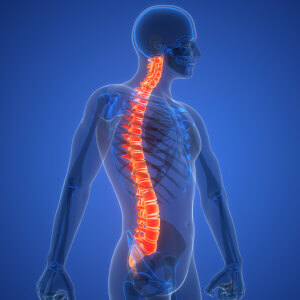
Ignite Somatic Awareness of the Spine
Video Practicum With Maya Gayatri Andersson, MSME, MSMT

In this 84-minute master practicum created exclusively for The Shift Network, you’ll gain an understanding of fundamental somatic movement principles and how to apply them in everyday life, as you’re guided to unwind trauma to balance and regulate your nervous system. You’ll learn a simple, gentle practice for grounding, nourishing, and revitalizing your back body and mind (soma) as you ignite somatic awareness of the spine — unwinding tension to achieve natural postural alignment that frees you from pain. This master practicum is designed to engage both new somatic explorers and experienced somatic connoisseurs.

Bonus

Resourcing the Pelvis
Movement Lesson Video With Maya Gayatri Andersson, MSME, MSMT

In this 31-minute video, Maya guides you in a gentle practice to free the pelvis by releasing muscular tension and optimizing its function. This lesson, which increases possibilities for movement, can help you achieve freedom of the hips, pelvis, lower back, and pelvic floor. Through slow mindful movements, these areas — fundamental for feeling secure and trusting in the world — are awakened.

Shipping method

– After making a purchase, you will see a View your order link to the Downloads page. Here you can download all the files related to your order.
– In case the link is broken for any reason, please contact us and we will resend a new download link.
– If you can’t find the download link, please don’t worry about it. This course is usually available and shipped within one day
– The course you purchased will have lifetime access
– Our support staff is the best by far! Please contact us at email: [email protected] and we will be happy to help!