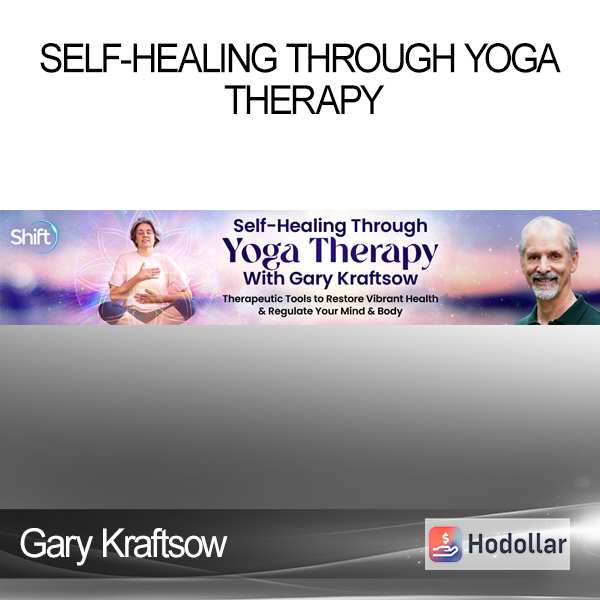
Gary Kraftsow – Self-Healing Through Yoga Therapy

$179.00 $597.00 Sale

Gary Kraftsow - Self-Healing Through Yoga Therapy

Gary Kraftsow – Self-Healing Through Yoga Therapy

Module 1: July 2, 2026

Adapt & Calibrate Breath-Centric Āsana to Manage Structural Conditions of the Lower Back & Sacrum

This breath-centric āsana sequence can help mitigate or possibly even prevent pain and limited range of motion in the low back and sacrum as a result of postural issues, muscular strain, muscular imbalances, conditions of the intervertebral discs, and/or nerve impingement.

You’ll also explore yoga therapy strategies, progressive treatment over time, lifestyle recommendations, and “red flags” requiring medical consultation.

Gary will guide you in a practice using the unique Viniyoga method of adapted breath-centric āsana designed and sequenced to support the low back and sacrum.

This approach utilizes a strategy that alternates contracting, releasing, and stretching the primary musculature – an approach known as Proprioceptive Neuromuscular Facilitation (PNF) in Western therapy and pratikriyā in yoga therapy.

In this opening module, you’ll:

  • Learn how to strengthen the lower back to build structural resilience, ensuring the spine has the necessary support to handle the physical demands of daily life
  • Explore how to stabilize the sacrum to create a secure foundation for the pelvis, which can help to prevent compensatory strain and allows for more fluid, confident movement
  • Discover how increasing circulation can facilitate the delivery of oxygen and vital nutrients to damaged tissues, providing the essential resources required for deep and lasting repair
  • Examine ways to reduce inflammation to lower the body’s stress response, allowing the natural healing process to begin
Module 2: July 9, 2026

Adapt & Calibrate Breath-Centric Āsana to Manage Structural Conditions That Impact the Hips

This breath-centric āsana practice can help mitigate or possibly even prevent hip pain and limited range of motion as a result of postural issues, muscular strain, pelvic imbalances, conditions of the hip joint (such as bursitis or labral tears), and/or sciatic nerve impingement.

Gary will share yoga therapy strategies, progressive treatment over time, lifestyle recommendations, and “red flags” requiring medical consultation…

… guiding you in a practice using the unique Viniyoga method of adapted breath-centric āsana designed and sequenced to support the hips and pelvis.

This approach utilizes a strategy that alternates contracting, releasing, and stretching the primary musculature – an approach known as Proprioceptive Neuromuscular Facilitation (PNF) in Western therapy and pratikriyā in yoga therapy.

In this module, you’ll:

  • Learn how to increase stability and range of motion to improve joint integrity, ensuring the hips effectively support the spine – whether standing, in motion, or seated in stillness
  • Discover how to strengthen weak muscles and release chronic contractions to restore the natural balance of the pelvic girdle, reducing the strain that often leads to secondary discomfort in the knees or lower back
  • Practice balancing muscular asymmetry to calibrate the body’s foundation, allowing for a more even distribution of weight and more efficient movement patterns
  • Explore developing healthy movement patterns to replace dysfunctional patterns and compensatory habits, providing long-term resilience against wear and tear
Module 3: July 16, 2026

Adapt & Calibrate Breath-Centric Āsana to Manage Structural Conditions of the Upper Back, Neck & Jaw

This breath-centric āsana practice can help mitigate or possibly even prevent tension headaches, limited mobility, and discomfort as a result of postural issues, muscular strain, cervical imbalances, conditions of the intervertebral discs, the jaw (such as TMJ), and/or nerve impingement.

Gary will share yoga therapy strategies, progressive treatment over time, lifestyle recommendations, and “red flags” requiring medical consultation.

In this module, you’ll:

  • Learn how to strengthen the upper back and neck to provide the necessary structural support for the head, reducing the load on the cervical spine and improving overall stability
  • Discover ways to release chronic contractions in the neck and jaw to alleviate tension-related discomfort and restore mobility to the cranial-cervical region
  • Explore how to increase circulation to damaged tissue to facilitate the delivery of oxygen and vital nutrients, providing the essential resources required for deep and lasting repair
  • Practice improving posture and postural awareness to help identify and shift the habitual patterns that lead to strain, building long-term resilience and ease in the upper body
Module 4: July 23, 2026

Adapt & Calibrate Breath-Centric Āsana to Manage Structural Conditions That Impact the Shoulders

This breath-centric āsana practice can help mitigate or possibly even prevent shoulder pain and limited mobility as a result of postural issues, muscular strain, and chronic tension…

… including conditions of the rotator cuff, the bursae, adhesive capsulitis (frozen shoulder), and/or nerve impingement such as Thoracic Outlet Syndrome (TOS).

Gary will share yoga therapy strategies, progressive treatment over time, lifestyle recommendations, and “red flags” requiring medical consultation.

He’ll cover various conditions, and the practice will be descriptive rather than prescriptive.

In this module, you’ll:

  • Learn how to decrease inflammation and increase range of motion to lower the body’s stress response and restore fluid movement to the joints
  • Explore ways to strengthen weak muscles and release chronic contractions to improve the stability of the rotator cuff and ensure the shoulder blade (scapula) moves in coordination with the arm
  • Discover how to balance muscular asymmetry to calibrate the upper body’s foundation, allowing for an even distribution of weight and more efficient movement in daily tasks
  • Examine methods to improve posture and postural awareness to identify habitual patterns – such as shoulder rounding, shoulder girdle elevation, or rotations that create axial-appendicular asymmetry, stressing the joints and often aggravating the neck and jaw

Part II: Yoga Therapy for Physiological Conditions

Module 5: July 30, 2026

Adapt & Calibrate Breath-Centric Āsana & Prāṇāyāma to Manage Stress

You’ll explore the stress response, the multidimensional symptoms of acute and chronic stress, the role of stress in disease, and treatment goals.

This can help you mitigate or even possibly even prevent sympathetic/parasympathetic dysregulation that can manifest as multiple symptoms, including neck and shoulder tension, tension headaches, digestive distress, fatigue, agitation, and sleep issues.

Gary will share general yoga therapy strategies, and how specific strategies work with specific symptoms of stress. As each individual responds to stressors differently, the practice will be descriptive rather than prescriptive.

In this module, you’ll:

  • Discover how to modify physical tension associated with stress such as neck and shoulder tension and tension headaches – and relearn relaxation habits to release the “bracing” patterns in the body and restore a sense of physical ease
  • Explore regulating the autonomic nervous system (ANS) to modify physiological arousal facilitating a smoother transition between sympathetic activation and parasympathetic recovery to restore balanced regulation
  • Learn how to balance emotions, transform thoughts, and modify behavior to create a stable mental environment, reducing the impact of reactive patterns and agitation on the physiological state
  • Link to sources of inspiration to provide a psychological “anchor,” fostering resilience and maintaining an internal regulated state even when managing other physiological symptoms of stress such as chronic fatigue, digestive distress, or persistent pain
Module 6: August 6, 2026

Adapt & Calibrate Breath-Centric Āsana, Prāṇāyāma & Chanting to Manage Fatigue

You’ll explore the nature of fatigue and conditions that result in fatigue, including the multidimensional symptoms, common causes, and treatment goals.

This practice can help mitigate or possibly even prevent physical and/or mental fatigue or exhaustion, cognitive “fog,” and low vitality as a result of chronic illness, burnout, anemia, or systemic depletion.

Gary will share general yoga therapy strategies, and how specific strategies work with various symptoms of fatigue.

As there are multiple causes of fatigue, the practice will be descriptive rather than prescriptive.

In this module, you’ll:

  • Learn to increase energy utilizing breath-centric movement and sound to stimulate circulation and awaken the system without over-taxing the adrenal glands
  • Discover ways to increase motivation and emotional resilience to transform the state of tamas (lethargy) into a more sattvic (clear and balanced) state of mind
  • Explore ways to increase concentration and mental clarity to reduce the “fog” associated with physical or mental exhaustion, allowing for sustained focus and establishing a purposeful direction going forward
  • Practice improving your memory and cognitive recall by using focused breathing coordinated with chanting to calm the nervous system and optimize brain function
Module 7: August 13, 2026

Adapt & Calibrate Breath-Centric Āsana & Prāṇāyāma for Better Sleep

You’ll explore the stages of sleep, the causes, symptoms, and consequences of sleep disruption, sleep disorders, and treatment goals.

This practice can help mitigate or possibly even prevent difficulty falling or staying asleep, non-restorative sleep, and the secondary effects of sleep deprivation such as cognitive impairment, irritability, and physiological fatigue.

Gary will share general yoga therapy strategies, and how specific strategies work at different times of day to support better sleep.

As the strategies to promote better sleep differ depending on the time of day they are practiced, and there are multiple causes of sleep disruption, the practice will be descriptive rather than prescriptive.

In this module, you’ll:

  • Learn about practices to promote better sleep throughout the day by managing physiological arousal and preparing the nervous system for a smoother transition into rest
  • Discover strategies to rest and relax to lower the sympathetic activation that often prevents the onset of deep, restorative sleep
  • Find ways to use time meaningfully when sleep is not possible, reducing the anxiety and “efforting” that often accompanies sleeplessness and insomnia
  • Explore transforming your perspective and attitude in relation to your sleep habits so you can shift from a state of frustration to one of acceptance and proactive self-regulation
Module 8: August 20, 2026

Adapt & Calibrate Breath-Centric Āsana, Prāṇāyāma & Chanting to Manage Pain

You’ll explore the objective physiology of pain, the subjective perception of and reaction to pain, acute vs. chronic pain, common causes, secondary symptoms, and treatment goals.

This practice can help mitigate or possibly even prevent persistent pain and systemic sensitivity as a result of chronic conditions, muscular-skeletal imbalances, or central nervous system sensitization, including those living with fibromyalgia.

Gary will share yoga therapy strategies to work with the objective and subjective nature of pain, and he’ll demonstrate how these strategies work with various symptoms of pain.

As there are many types and causes of pain, you’ll work with fibromyalgia – a specific condition in which pain is a primary symptom. The practice will be descriptive rather than prescriptive.

In this module, you’ll:

  • Learn about methods to reduce pain by utilizing gentle, breath-coordinated movement and sound to interrupt pain signaling and lower physical guarding
  • Discover methods to regulate the physiological response to pain to shift the nervous system away from a state of hyper-vigilance and reduce the inflammatory cascade
  • Explore ways of increasing resilience and vital energy (prāṇa śakti) to provide the internal strength necessary to manage chronic symptoms without further depletion
  • Study practices that can increase your focus and help you gain mastery over the mind to transform the relationship with pain, reducing its emotional impact and fostering a more stable internal state

Part III: Yoga Therapy for Mental & Emotional Support

Module 9: August 27, 2026

Adapt & Calibrate Breath-Centric Āsana, Prāṇāyāma, Chanting, Mantra & Meditation to Manage Anxiety

You’ll explore the nature of anxiety, its multidimensional impact, and common anatomical, physiological, cognitive, emotional, and behavioral symptoms…

… including frequently occurring types of anxiety (and those that may require professional mental health consultation), and appropriate treatment goals.

This practice can help mitigate or possibly even prevent the pervasive effects of anxiety, such as physical restlessness, racing thoughts, emotional overwhelm, and the habitual avoidance patterns that limit daily life.

Gary will share yoga therapy strategies to work with the multidimensional symptoms of anxiety, with a focus on the inner dimensions of thought, feeling/mood, and behavior.

As there are many types and degrees of anxiety, the practice will be descriptive rather than prescriptive.

In this module, you’ll:

  • Learn how to manage anatomical and physiological symptoms of anxiety by utilizing breath-centric movement to ground the physical system and soothe the hyper-arousal of nervous energy in the body
  • Discover ways to manage emotional/feeling/mood symptoms of anxiety to transform states of agitation into a state of calm and clarity
  • Explore managing cognitive symptoms of anxiety by using focused breathing and chanting to interrupt repetitive thought loops and cultivate a sense of mental stillness
  • Learn how to create an integrated practice to address this multidimensional condition, fostering a sattvic (clear and balanced) mind and developing the resilience needed to meet life’s challenges with equanimity and steadiness
Module 10: September 3, 2026

Adapt & Calibrate Breath-Centric Āsana, Prāṇāyāma, Chanting, Mantra & Meditation to Manage Depression

You’ll explore the nature and physiology of depression, its multidimensional impact, common anatomical, physiological, cognitive, emotional, and behavioral symptoms…

… including frequently occurring types of depression (and those that may require professional mental health consultation), and appropriate treatment goals.

This practice can help mitigate or possibly even prevent the heavy and depleting effects of depression, such as physical lethargy, persistent sadness, loss of interest, and the cognitive “fog” that can obscure your sense of purpose and experience of happiness and joy.

Gary will share yoga therapy strategies to work with the multidimensional symptoms of depression, with a focus on the inner dimensions of thought, feeling/mood, and behavior.

As there are many types and degrees of depression, the practice will be descriptive rather than prescriptive.

In this module, you’ll:

  • Discover how to manage anatomical and physiological symptoms of depression by utilizing breath-coordinated movement and sound to stimulate circulation, improve posture, and gradually awaken the system’s vital energy
  • Learn how to manage emotional/feeling/mood symptoms of depression to transform states of heaviness and lethargy into a state of lightness and emotional resilience
  • Explore managing cognitive symptoms of depression by using focused breathing and chanting to disperse mental inertia, helping to restore concentration and mental focus
  • Investigate how to create an integrated practice to address this multidimensional condition, fostering a sattvic (clear and balanced) mind and cultivating the resolve needed to re-engage with life and reclaim a sense of wellbeing
Module 11: September 10, 2026

Adapt & Calibrate Breath-Centric Āsana, Prāṇāyāma, Chanting, Mantra & Meditation to Work With Addiction

You’ll explore the nature and characteristics of addiction, its relation to and distinction from habit, the multidimensional impact of addiction, the yoga theory of habit change, and appropriate treatment goals.

This practice can help mitigate or possibly even prevent compulsive patterns and addictive behaviors by strengthening the capacity for conscious choice and reconnecting with a sense of internal wholeness.

Gary will share yoga therapy strategies to strengthen willpower, manage triggers, and create new and more healthy choices.

Because of the individual nature of addiction, the practice will be descriptive rather than prescriptive.

In this module, you’ll:

  • Learn about tools and strategies to observe and change addictive behavior and action by developing the “witness” capacity of the mind to recognize the space between impulse and action
  • Identify and overcome common triggers by utilizing breath-centric techniques and mantra to stabilize the nervous system during moments of craving or reactivity
  • Connect with sources of guidance and inspiration to foster a sense of spiritual and emotional support, moving beyond the cycle of dependency and rediscovering a sense of inherent completeness and self-reliance
  • Uncover deeper goals and values and recognize true sources of nourishment and purpose to replace temporary cravings with lasting sources of joy and fulfillment
  • Realize and awaken to your true nature, clearing the mental veils that can prevent you from experiencing your inherent peace and clarity
Module 12: September 17, 2026

Adapt & Calibrate Breath-Centric Āsana, Prāṇāyāma, Chanting & Meditation to Work With Chronic Illness

You’ll explore the chronic illness symptom cycle, the multidimensional nature of health and illness, the impact of chronic illness on your relationship to yourself and others, the yoga theory of self-management, and appropriate treatment goals.

This practice can help mitigate or possibly even prevent long-term health conditions for those who seek to improve their quality of life, navigate the emotional toll of illness, and rediscover a sense of agency and wholeness.

Gary will share yoga therapy strategies to support health and wellbeing at the levels of the body, the breath, the mind, and the spirit.

Because of the differences between chronic illnesses, as well as the unique nature of each individual’s needs and abilities, the practice will be descriptive rather than prescriptive.

In this final module, you’ll:

  • Learn how to calibrate exercise levels to your condition by utilizing gentle, breath-coordinated movement to maintain mobility and function without causing post-exertional depletion
  • Discover ways to use the breath for self-regulation to increase energy and vitality, restore balance, and/or remain calm and relaxed, depending on the immediate needs of the nervous system
  • Begin to transform negative thoughts and feelings by using focused breathing, mantra, and meditation to shift the internal narrative from one of limitation to one of possibility
  • Start to establish a positive outlook and life philosophy that integrates the reality of one’s current state while fostering a sattvic (clear and balanced) mind capable of experiencing contentment
  • Realize you are not your diagnosis and re-connect to the sacred dimension of life, awakening to your true nature that remains untouched by physical or mental condition

SPECIAL BONUS OFFER

In addition to Gary ’s transformative 12-module course, you’ll receive this special bonus offering to complement the course and take your understanding and practice to an even deeper level.

Bonus

What’s the Difference: Yoga Class vs Yoga Therapy?
PDF Teaching by Gary Kraftsow

Isn’t all yoga therapeutic? What’s the difference between a yoga class and a Yoga Therapy session? For more than 50 years, master yoga teacher Gary Kraftsow has trained hundreds of yoga teachers and Yoga Therapists. In this article from the International Journal of Yoga Therapy, he describes the distinction between the yoga classes vs. Yoga Therapy sessions.

Bonus

What’s the Difference? Yoga Teacher vs. Yoga Therapist Training Programs
PDF Teaching by Gary Kraftsow

Can a yoga teacher teach Yoga Therapy? What makes a yoga teacher training program different from a Yoga Therapist training program? In this article from the International Journal of Yoga Therapy, Master yoga teacher Gary Kraftsow describes the difference between training yoga teachers vs. Yoga Therapists. ### Rakṣana Krama – Building Your Breath Threshold Rakṣana Krama is an approach to yoga practice designed to protect your health as you move through life, particularly in the “midday” stage of life, from ages 30-70. According to the Yoga tradition, prāṇa is the flow of pure consciousness, awareness itself. In this video, Gary explores prāṇa – why it does not mean “breath” – and why breath is understood as a medium on which prāṇa flows. Discover how building your breath threshold is a way to work directly with prāṇa and consciously influence your nervous system to help manage stress, stimulate your immune response, and enhance energy. This class includes a model who demonstrates techniques.

Shipping method

– After making a purchase, you will see a View your order link to the Downloads page. Here you can download all the files related to your order.
– In case the link is broken for any reason, please contact us and we will resend a new download link.
– If you can’t find the download link, please don’t worry about it. This course is usually available and shipped within one day
– The course you purchased will have lifetime access
– Our support staff is the best by far! Please contact us at email: [email protected] and we will be happy to help!