

$119.00 $349.00 Sale


In this opening session, you’ll receive an overview of the basic principles of Clinical Somatic Education.
Understanding the role of stress and its hold on your body and life will be a consistent theme throughout the course. As a result of stress, chronic, habituated muscle tension — also known as sensory motor amnesia (SMA) — can take hold in the muscles that support and attach to your spine. This is how back pain or disc problems can develop. But when you learn to sense the connection between the front and back of your body, and pandiculate those muscles gently, you’ll begin to sense relief, freedom of movement, and more mobility.
You’ll learn about the importance of learning to connect the head and neck to the center of the body and vice versa.
You’ll explore movements — including seated, on your hands and knees, and on the floor — to begin forging a connection between your head and pelvis. You’ll also explore the teleceptors in your brain and head, and how your survival can depend on being able to look up, down, side to side, and behind you.
Much of your awareness depends on where your attention is focused, so Martha will reveal the areas of the brain that are involved in awareness and attention.
You’ll leave this class with softer back muscles and a more awakened sense of connection between your head, spine, and pelvis.
During this opening module, you’ll:
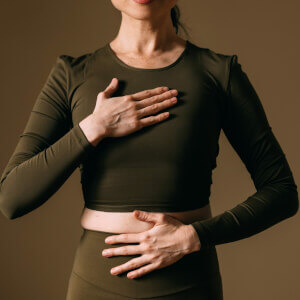
All of the major muscles that move you forward and back, and allow you to side-bend and rotate, connect into the pelvis. The pelvis is your center of gravity and it supports your vital organs. It gives birth to life.
Yet, when you become habituated to the Startle Reflex (also known as the Red Light Reflex) — a primal reflex of protection that causes us to shrug our shoulders, tighten our bellies, and round forward — you can lose your sense of connection to your center. All you feel is tension, and this can contribute to pelvic floor pain, shallow breathing, neck and shoulder pain, and fatigue.
You’ll learn how to release tension in the front of your body — from your sternum to your pelvis — so you can connect more deeply to your center of gravity and your center of self-knowledge. This lesson will help you voluntarily release muscles that reflexively draw you inward in times of worry or fear, overwhelm, or collapse.
In this session, you’ll:

As humans, we’re driven to stand up and move forward in life. It’s in our brains and our DNA. We have a spine that holds up and supports us, and a face and eyes that face forward so we can see what we want and move toward it.
At four months old, infants lift their heads to look around their world — using our back muscles to connect to our head. This is the Landau (Green Light) Reflex. From that moment on, we respond instantly when we’re called to action, whether to run and play, answer the phone, or complete a project.
In this session, you’ll explore how, If this reflexive response to outside stress and feedback becomes habituated, you may experience chronic back pain, disc issues, sciatica, or shoulder and neck pain.
But, when you learn to sense the muscles of your back, you can learn to switch them off when they’re no longer needed for an action.
When you can coordinate the front or your body with the back, you’ll be better able to move in a way that allows you to adapt and rest when you need to.
Guest teacher Karen Statner will guide you in a different way to connect your arms and legs to your center, as you learn to sense and recalibrate the coordination between the back and front of your body.
This week, you’ll:
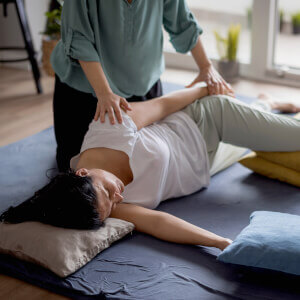
It’s not uncommon to feel out of balance — not just in your body, but in your life.
You’ll explore why that happens, and how, through somatic movement, you can regain your sense of balance and symmetry in your body — which will enhance your ability to find balance in other areas of your life.
You’ll learn that you need to be connected to what’s “out there” as much as within your own somatic process and awareness.
Martha will guide you to connect “out there” (your head, arms, shoulders, hips, and legs) to “in here” (your waist, back, and front). This class will leave you with an improved sense of balance and symmetry in your bodies that will enhance your ability to find balance in other areas of your life.
During this session, you’ll:
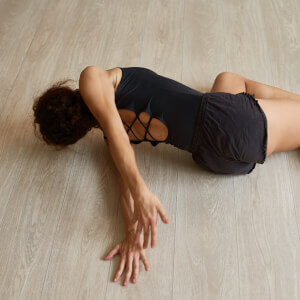
You have two sides to your brain — one that focuses on the concrete and literal, and the other on the creative aspects of life. The two sides of your brain are also indicative of other functions in your body — your two arms, shoulders, legs, feet, kidneys, and lungs.
When accidents and injuries happen, you can lose your sense of balance in the center and no longer experience the fullness of your somatic system. You have nerve fibers in your brain that connect one hemisphere to the other and allow your hemispheres to talk to each other. But when you’re out of balance and out of sync, one side of your body stops talking to the other — leaving you more prone to falls, one-sided compensation, and an uneven gait.
You’ll explore movements of your shoulders, arms, hands, pelvis, and feet, designed to get both sides of your brain and body back in communication with one another.
You’ll learn movements of one side of your body, then diagonal movements, and, finally, full body integration of your shoulders and pelvis in crawling and twisting.
During this session, you’ll:
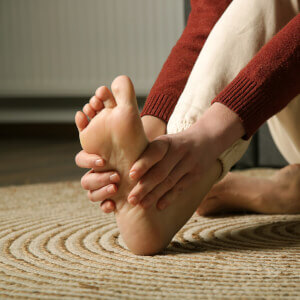
Your feet show the history of your life as a bipedal human. We’re the only species meant to stand on two feet and move forward toward what we want.
When we lose our connection to the ground, there can be disastrous consequences. We fall, we slip, we lose control of our balance.
Getting up and down off the floor is a skill many people lose as they get older, yet that doesn’t need to happen.
In this module, you’ll learn how to get down on the floor and get back up with more ease and control. You’ll also practice sensing your feet in a playful, exploratory way and then connect that sensation to the movement of your knees, hips, pelvis, waist and shoulders.
In this session, you’ll:

This last session will bring you back to your center as you explore, once again, the movement of your pelvis and center of gravity — and how it all connects down to your feet and up to your head.
By this point, you’ll have learned to sense and move your spine more comfortably, and cultivated more control of the front and back of your body. You’ve released tension in your waist for more suppleness in your shoulder girdle and pelvic girdle. Now you’re ready to learn how to walk with more ease, comfort, and efficiency, as you were born to do.
Martha will show you how to connect the movement of your feet to a basic staple of your practice, “Arch and Flatten.” You’ll experience how adding the movement of your feet can change the way you experience two more basic movements — preparing you to explore a powerful movement for the feet, knees, and hips that will ease any hip or lower leg and foot pain or restriction you may have.
As a result, you’ll be able to move forward with more balance, confidence, and ease. This movement class will be calming and playful with plenty of imagery to help you sense your ability to respond to changes in movement coming at you from the back, front, diagonals, and sides.
You’ll also practice standing and lying down… however, you can also do these movements while seated in a chair.
In this closing session, you’ll:
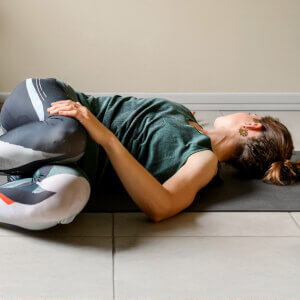
In this illuminating article, you’ll learn two simple yet powerful daily somatic awareness practices to help you connect with your whole body — from your feet to your center — and develop a deeper understanding of your habitual postures. These practices also shed light on your unconscious morning, midday, and evening routines that can significantly influence how your day unfolds. Chronic habituated muscle tension, known as sensory motor amnesia (SMA), often stems from small, automatic habits that may be detrimental to your wellbeing. Over time, these patterns can shape how you feel in your body. This resource offers a first step toward greater awareness and intention in your daily life.
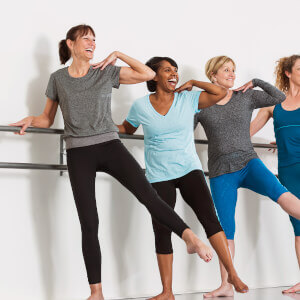
In this video, Martha shares how to reframe your daily practice, not as a task to check off your daily to-do list, but as a warm-up to start your day or wind down in the evening. Just like athletes, dancers, and musicians begin their training with the basics — no matter their level of skill — approaching your own movement practice this way helps you stay connected to the fundamentals. This provides you with the mindset of a lifelong mover, committed to refining the art of movement for the rest of your life.
– After making a purchase, you will see a View your order link to the Downloads page. Here you can download all the files related to your order.
– In case the link is broken for any reason, please contact us and we will resend a new download link.
– If you can’t find the download link, please don’t worry about it. This course is usually available and shipped within one day
– The course you purchased will have lifetime access
– Our support staff is the best by far! Please contact us at email: [email protected] and we will be happy to help!