











$45.00
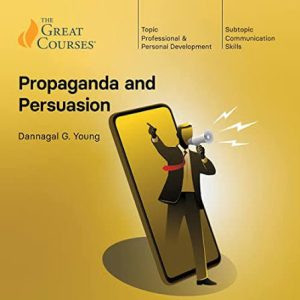
Persuasion is a central element of daily life. From politics and advertising to relationships, public health, and social media, people are constantly attempting to influence others while also being exposed to persuasive messages themselves.
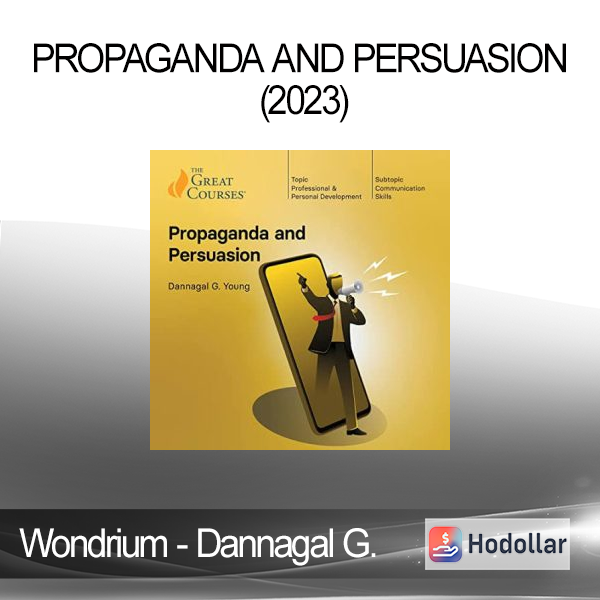
In Propaganda and Persuasion, Professor Dannagal G. Young, PhD, explores the history, science, psychology, and techniques behind persuasion, propaganda, manipulation, and coercion.
Across 12 lectures, the course examines how persuasion works, how mass media transformed influence, and how individuals can better recognize and understand persuasive techniques.
Explore the development of persuasion from Aristotle through the rise of modern mass communication.
Topics include:
Examine how books, newspapers, radio, and other forms of mass media allowed the same messages to reach large populations simultaneously.
The course explores the emergence of public relations and consumer marketing, as well as the ethical distinctions between:
Explore social-science frameworks that help explain why people respond to persuasive messages.
Learn how persuasion can operate through both:
Rather than functioning separately, reason and emotion can work together to influence attitudes, beliefs, and behavior.
Discover how advertising evolved from emphasizing product features to associating products and brands with larger meanings, emotions, identities, and experiences.
Explore how persuasion can use:
Examine the role that identity and group membership play in shaping how people interpret and respond to persuasive messages.
The course considers how existing attitudes and social identities can influence what messages people accept or reject.
Explore the challenges created by digital communication and social media, including:
The course concludes by examining how people can become more thoughtful consumers of information in an environment filled with persuasive messages.
– After making a purchase, you will see a View your order link to the Downloads page. Here you can download all the files related to your order.
– In case the link is broken for any reason, please contact us and we will resend a new download link.
– If you can’t find the download link, please don’t worry about it. This course is usually available and shipped within one day
– The course you purchased will have lifetime access
– Our support staff is the best by far! Please contact us at email: [email protected] and we will be happy to help!